
Payday Super
Know before the ATO knows
Helping employers identify, manage & monitor Payday Super obligations before they become ATO issues
Watch our Payday Super webinars
Increased ATO visibility means increased employer risk
Payday Super has changed the way employers manage superannuation compliance. Rather than reviewing obligations quarterly, employers now need confidence that super is being calculated correctly, paid to the right fund, and received on time every pay cycle, whether payroll is managed internally or by a third-party provider.
For many organisations, payroll errors can remain hidden until they attract the ATO’s attention, particularly when large workforces, multiple payroll systems, complex industrial arrangements, or recent organisational changes are involved.
Is your organisation affected?
Payday Super review is most suitable for:
- 250+ employees
- Multiple awards or enterprise agreements
- Casual, shift-based, or seasonal workforces
- Multiple payroll systems or employing entities
- Recently changed payroll providers or technology
- Acquired another business or restructured operations
- Internal audit, Board, or governance reporting requirements
- Previously identified payroll or superannuation issues
Questions to ask yourself
1. Have you independently tested the super treatment of all payroll categories in the last 12 months?
2. How do you verify that super contributions have actually reached employee funds on time?
3. What would tell you an error has occurred before the ATO identifies it?
4. Have you changed payroll systems, payroll providers, awards, enterprise agreements, entities, or remuneration structures recently?
5. Could you confidently identify every affected employee and pay period if a super shortfall was discovered today?
If you are unsure about any of the questions above, your organisation may have hidden Payday Super risks.
Speak with our payroll team to assess your current compliance, identify potential gaps, and understand where your greatest risks may lie.
The SW Advantage

Every dollar reconciled
Full payroll-to-output reconciliation

Built for Payday Super
Rules, penalties, and interest built in

Any payroll system
Flexible data mapping and ingestion

Identify issues fast
Every discrepancy classified and quantified

Support remediation
Disclosure and rectification ready

Re-run in minutes
Faster reviews and ongoing monitoring
See the technology in action
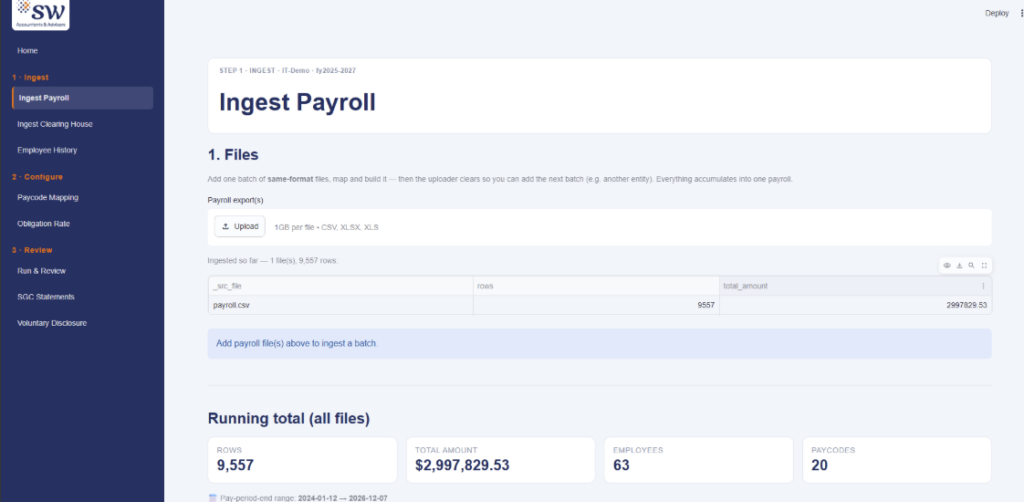
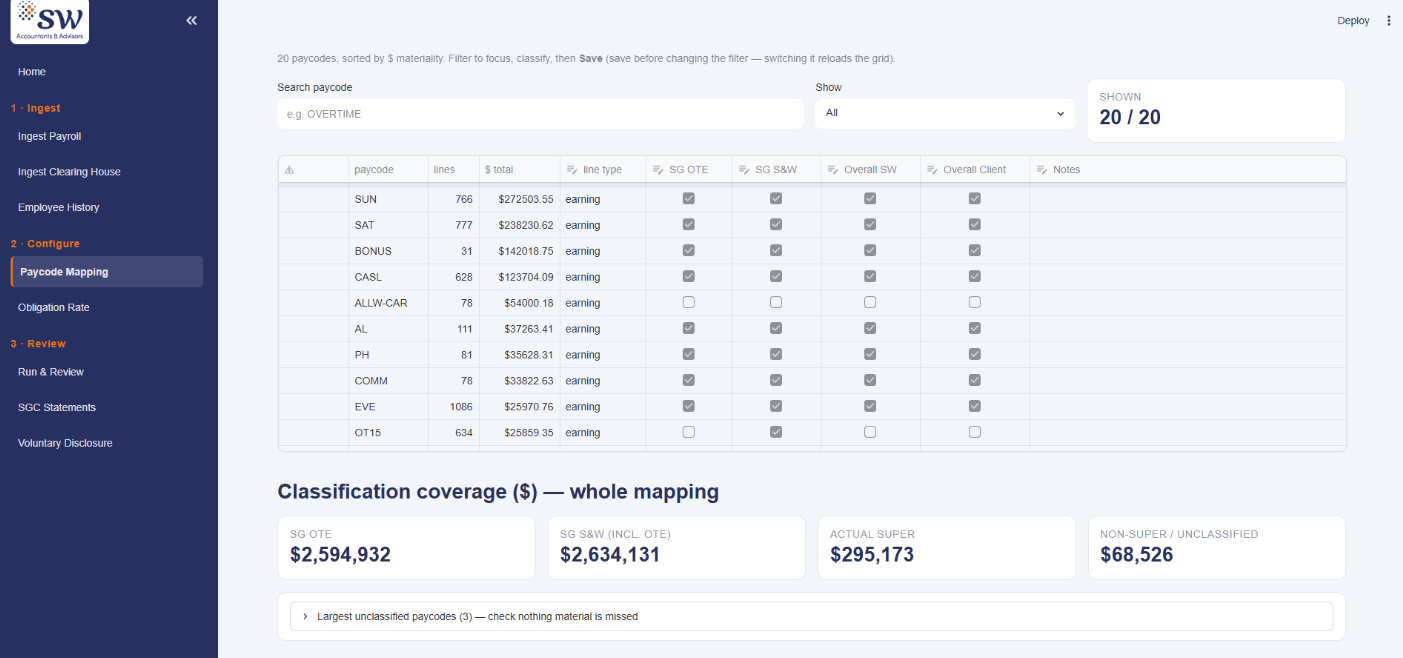
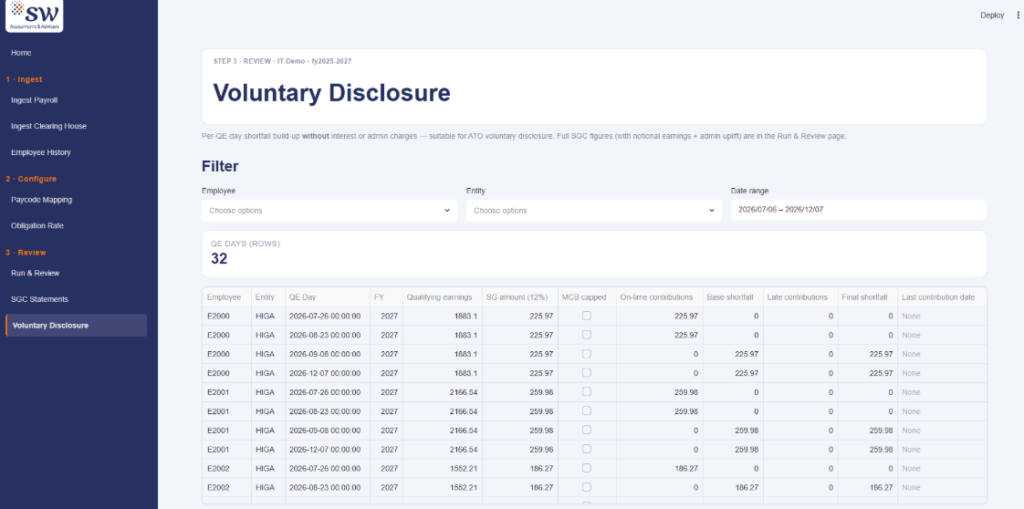
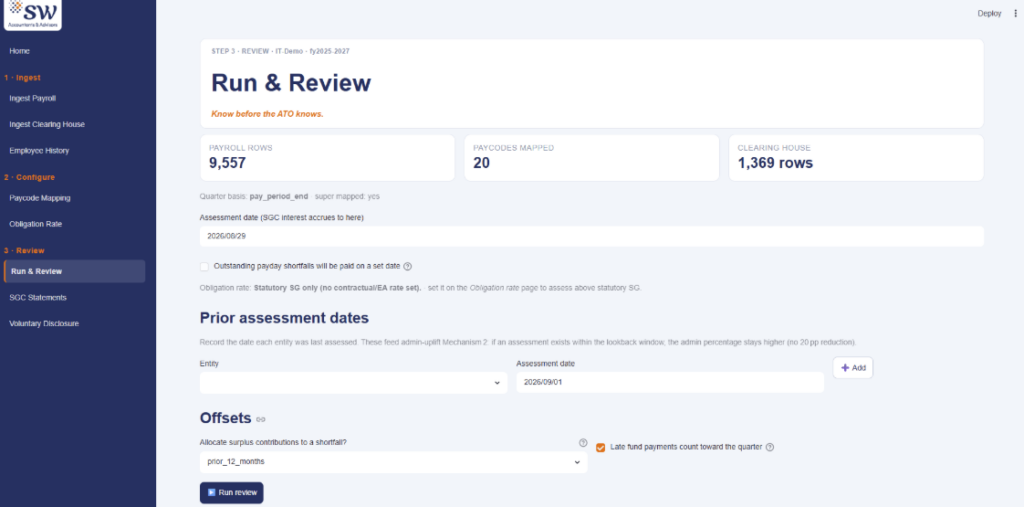
SW has developed the SW Payday Super Tool that analyses payroll data, identifies potential superannuation issues, and highlights the underlying causes, enabling employers to focus on remediation and ongoing compliance rather than manual investigation.
A short demonstration can show:
- how potential issues are identified
- common causes of payroll and super discrepancies
- areas where employers are most exposed
- how ongoing monitoring can provide greater confidence under Payday Super.
What does SW help with?
Get it right
Independent assessment of payroll and superannuation obligations to identify potential risks, gaps, and historical issues.
Stay right
Ongoing monitoring and review processes that help employers maintain compliance as payroll environments evolve.
Demonstrate governance
Provide assurance and reporting that supports management, Boards, and audit committees.
Be protected
Support with remediation, voluntary disclosures, and responding to identified issues.
Speak with Paul Hum, Partner
Payroll & Employment Taxes
Paul works with employers across a range of industries to assess Payday Super readiness, identify potential areas of risk, and establish practical monitoring and remediation solutions.